Anticipation
Familiar settings, such as a classroom, and activities that can be explained and shown before starting.

Virtual reality for autism (ASD)
Inclusive virtual reality experiences that help schools, therapists and teachers support autistic children and young people in a predictable environment, with adjustable stimuli and a professional by their side at all times.
Why virtual reality?
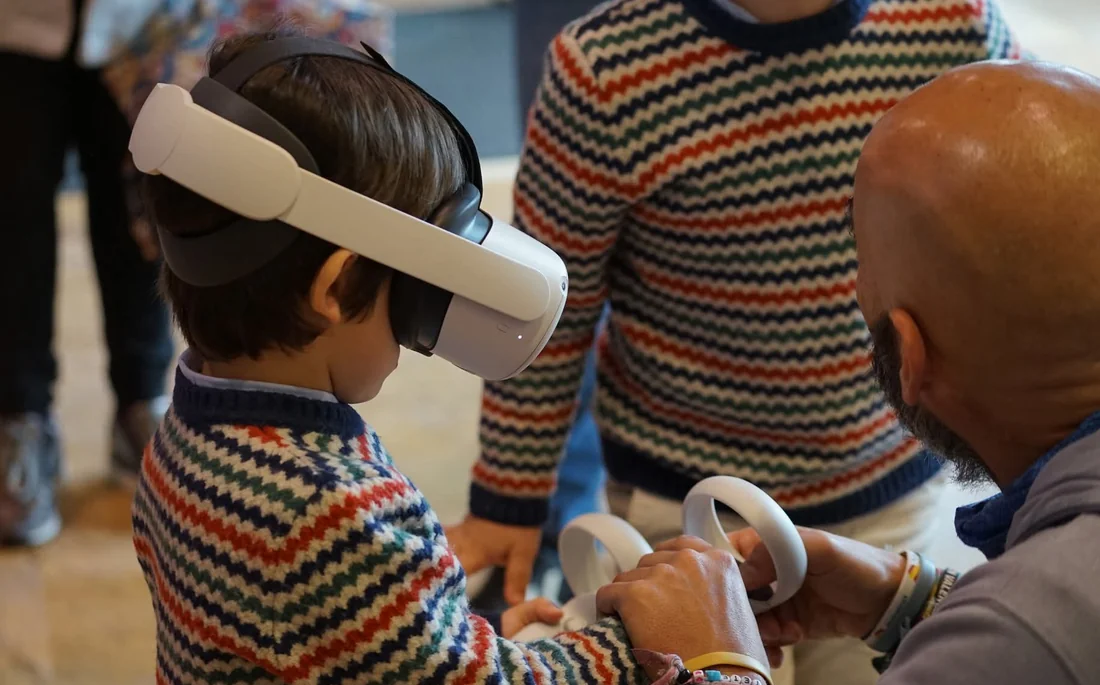
Many autistic people feel safer when they know what is going to happen and when their surroundings don’t overwhelm them. Virtual reality makes exactly that possible: controlled settings that repeat the same way every time, where the professional chooses the activity, adjusts the length and supports every step. The game format is also motivating and helps sustain attention.
It is not a therapy in itself and it does not replace anyone: it is a support tool that the team builds into their usual work, always considering whether it suits each person. A diagnosis alone does not determine whether an experience is appropriate.
Familiar settings, such as a classroom, and activities that can be explained and shown before starting.
Small challenges to observe, compare and decide that encourage staying focused during the activity.
Visual and sound stimuli that the professional can introduce gradually and respectfully.
Reaching, catching and sorting objects with the controllers, at their own pace and celebrating every success.
What the science says
Research on virtual reality and autism is growing every year. Recent scientific reviews find improvements in social skills and emotion recognition in autistic children and adolescents, especially with programmes lasting several weeks and with good support. They also note that studies are still small and very different from each other, and that some people may experience dizziness, eye strain or sensory overload with headsets. That is why we put it this way: a promising field, still being researched, in which each case is assessed individually.
Yang et al., 2025 · JMIR — 14 studies, 279 autistic children and adolescents.
Cui et al., 2026 · BMC Psychology — 10 trials, 464 participants.
Wang et al., 2026 · JMIR Pediatrics — 11 trials, 718 participants: there is not yet enough data to say which is best.
The reviews call for supported, voluntary sessions that pay attention to each person’s sensory tolerance. That is how we work.
What a session looks like
Each session is planned around the person, not the technology.
The professional explains what will happen, shows the headset and the activity, and chooses the experience that best fits their interests and goals.
The person enters the virtual environment with someone by their side who guides, adapts and checks how they are doing at all times.
We see what motivates them and which abilities come into play to decide how to continue. If they feel uncomfortable, the experience stops.
We include training on using the headset and the experience, so the centre can run it on its own.
Professionals who already use it

Dr Marcos Madruga, head of Paediatric Neurology at Neurolinkia, explains how his team uses virtual reality in their work with children and adolescents with neurodevelopmental conditions, such as autism.
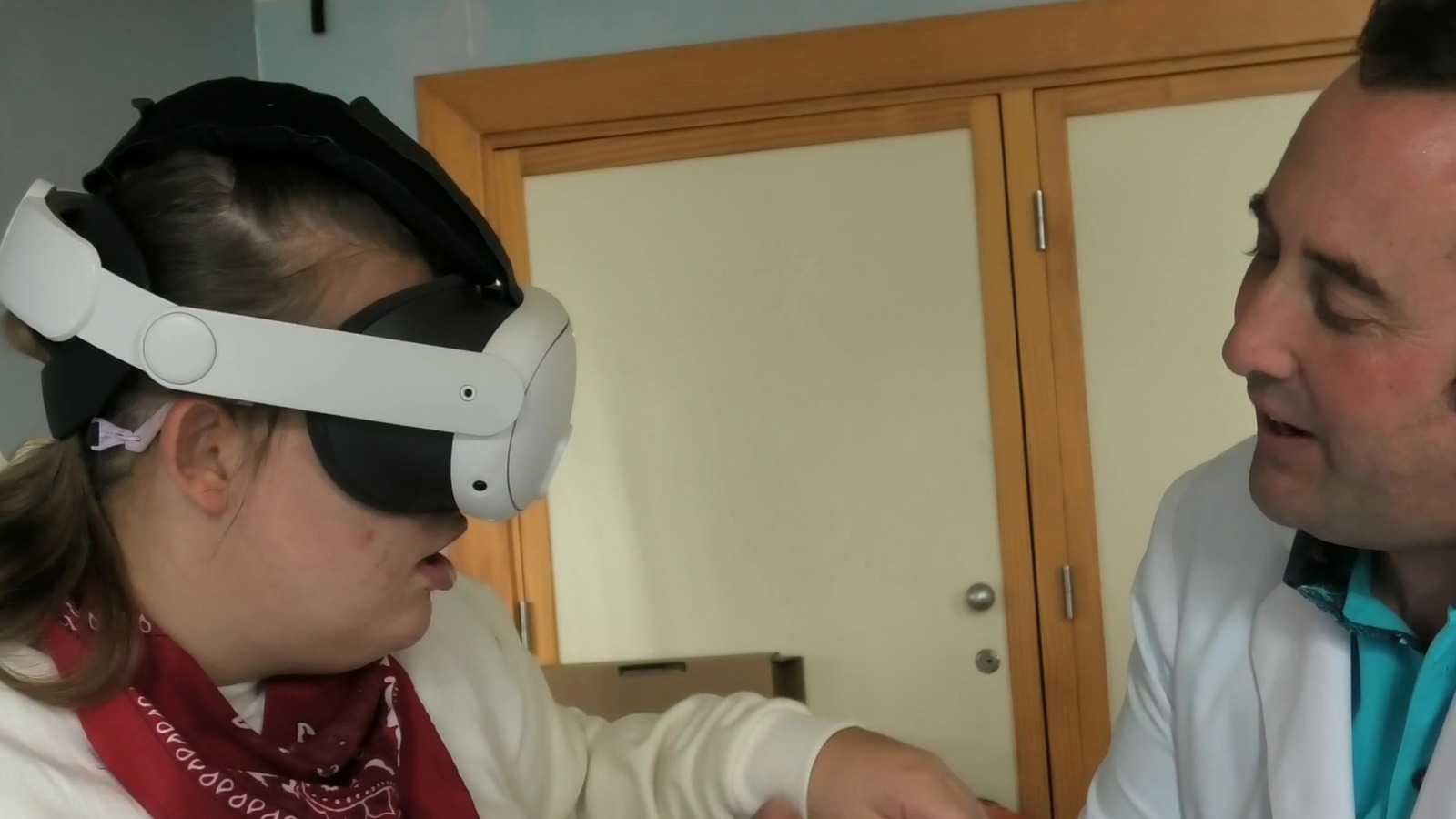
At Ciudad San Juan de Dios (Alcalá de Guadaíra, Seville), the special education team works with Minifunkids and highlights improvements in their students’ communication, autonomy, motivation and hand-eye coordination.
Frequently asked questions
It can be a good support resource when the environment, the stimuli and the activity suit each child’s needs and preferences. Research shows promising results, especially in social skills and attention, but there is no single answer: each case is assessed by the professional who supports them.
No. Minifunkids is a tool that complements educational or therapeutic work. It never replaces the assessment, judgement or work of professionals.
It can happen, as with other stimuli. That is why sessions are voluntary, adapted to each person’s sensory tolerance and always supported by someone. If the person feels uncomfortable or does not want to continue, the experience stops.
It depends on the person, the experience and the headset manufacturer’s recommendations. Before starting, each case should be assessed with the professional in charge.
There is no universal length. Each session is adjusted to the goal, attention level, sensory tolerance and well-being of each person.
A compatible virtual reality headset, a safe and clear space, and a willingness to try. We include training on using the headset and the experience. The best way to start is with a demo at your centre, with no commitment.
Any other questions? See all our frequently asked questions or learn more about our areas of work.
For centres, associations and professionals
If you work with autistic children or young people at a school, an association, a clinic or a practice, we will show it to you with no commitment.